Body

Resources for parents, carers and family members

This page provides a list of resources to help parents, carers and family members learn more about child sexual abuse and how to prevent it.

Resources about child sexual abuse
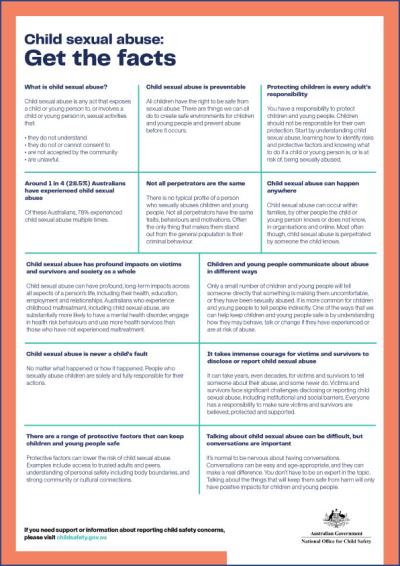
Get the facts provides information and statistics about child sexual abuse. It helps to dispel common the role they can play in protecting children and young people.
Publication cover - Get the facts

We have also developed a range of information for parents, carers and family members to learn about child sexual abuse. This includes:
Resources and activities to support conversations with children

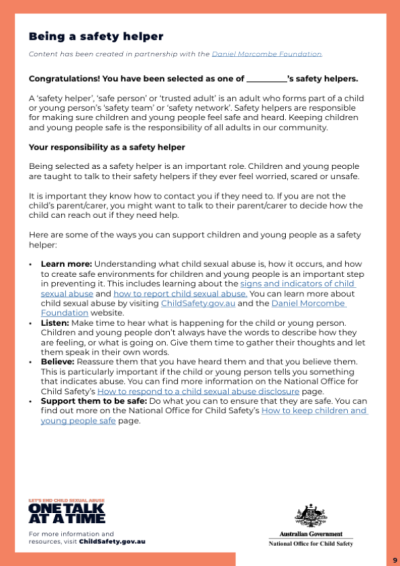
This activity provides ways you can support children and young people as a ‘safety helper’, which is an is an adult who forms part of a child or young person’s ‘safety team’ or ‘safety network’. Safety helpers are responsible for making sure children and young people feel safe and heard.
Being a safety helper thumbnail

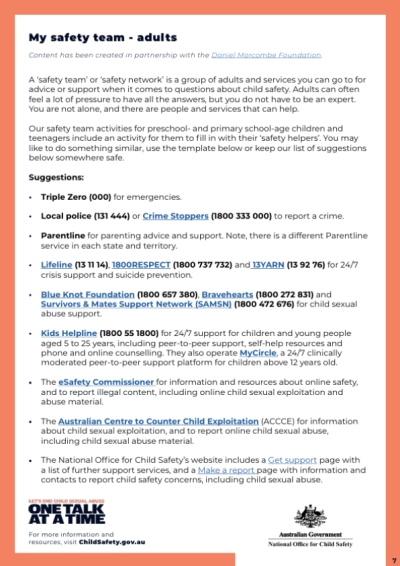
This resource helps adults identify their ‘safety team’ or ‘safety network’, which is a group of other adults and services you can go to for advice or support when it comes to questions about child safety. Adults can often feel a lot of pressure to have all the answers, but you do not have to be an expert. You are not alone, and there are people and services that can help. We also have safety team activities for preschool- and primary school-age children and teenagers, which include an activity for them to fill in with their safety helpers.
My safety team – adults thumbnail

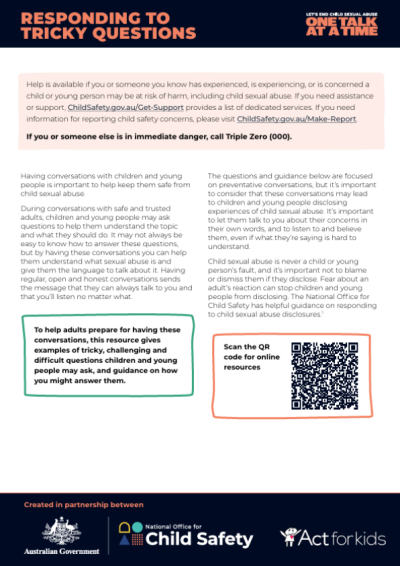
This resource supports parents and carers to have conversations with children and young people about sexual abuse. During conversations with safe and trusted adults, children and young people may ask questions to help them understand the topic and what they should do. It may not always be easy to know how to answer these questions, but by having these conversations, adults can help them understand what sexual abuse is and give them the language to talk about it. To help adults prepare for having these conversations, this resource gives examples of tricky, challenging and difficult questions children and young people may ask, and guidance on how you might answer them.
Responding to tricky questions thumbnail

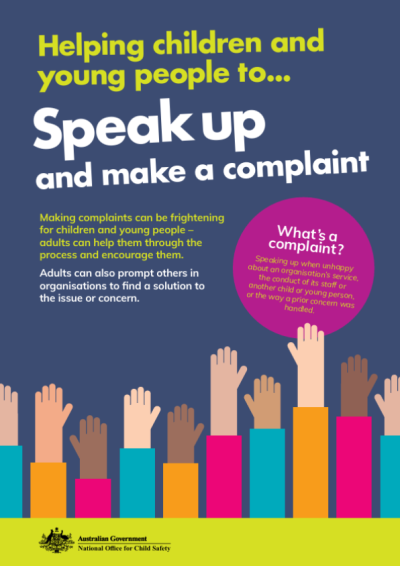
This resource includes 10 steps designed to help adults understand their role in helping children and young people know their rights and how to support them to raise concerns. The resource can be read together with the Speak up resources designed for children and young people.
Helping children and young people to speak up and make a complaint thumbnail

Created in collaboration with author Jayneen Sanders, these resources include stories and activities for adults to do alongside children and young people to help them understand personal safety, body boundaries and consent in a child-friendly way.
Decorative

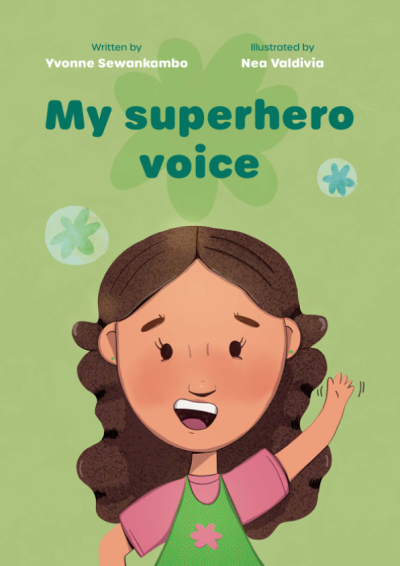
My superhero voice is an age-appropriate storybook which supports parents, carers and other adults from all cultures and backgrounds to have preventative conversations about child sexual abuse with children and young people. This storybook empowers children to use their “superhero voice” to speak up when something doesn’t feel right, and emphasises the importance of telling a trusted adult about any concerns. It is recommended adults read this with children and young people aged 5 years and up and has been translated into 17 languages.
My superhero voice – English thumbnail

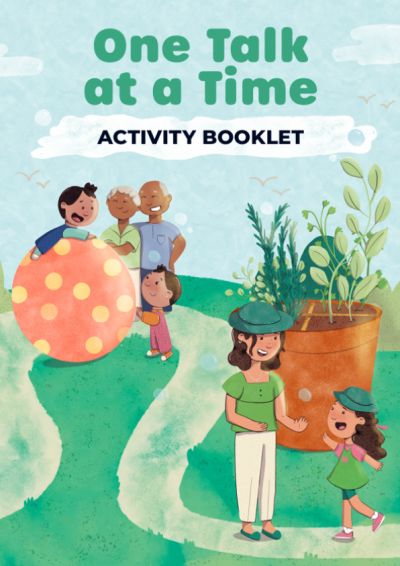
This booklet is full of fun and interactive activities developed to help adults identify everyday opportunities they can use to have open conversations with children and young people to keep them safe from child sexual abuse. The booklet is designed to help children learn about staying safe, understanding boundaries, and knowing who to talk to if they feel unsafe. It encourages conversations between children and trusted adults in a positive, age appropriate and engaging way. This booklet is recommended for children aged 5 years and up.
Activity booklet thumbnail

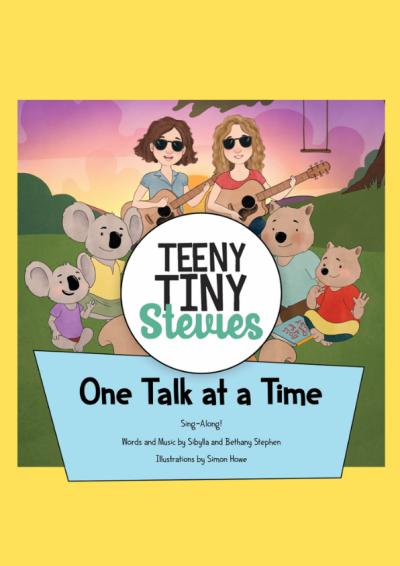
We partnered with children’s music group, Teeny Tiny Stevies, on a song called ‘One Talk at a Time’. The song teaches children and young people about their bodies’ warning signs, not keeping secrets and talking to trusted adults. Adults can use it as a memorable and fun way to start conversations with the children and young people in their lives about body safety and child sexual abuse.
One Talk at a Time sing-along book thumbnail

Resources for First Nations communities

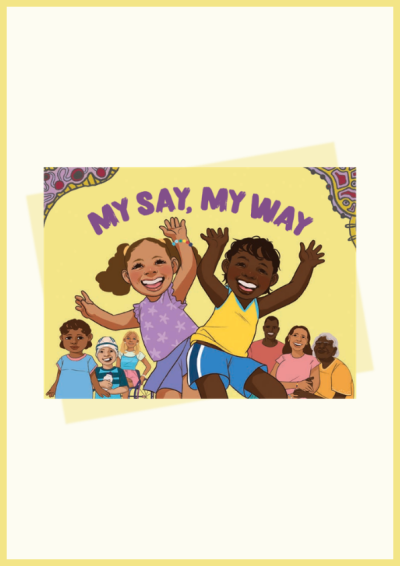
My Say, My Way is a storybook designed to help teach First Nations kids about body safety. It follows cousins Billy and Bindy as they learn about their bodies, boundary setting, consent, and safe and unsafe touch. The back of the book has guidance for adults to help them explain some of the words used in the storybook. This storybook is part of the ‘My Say, My Way’ resources that were co-created with First Nations men and women, mothers, fathers, sisters, Aunties, Uncles, and Elders from across Australia.
My Say, My Way – storybook thumbnail

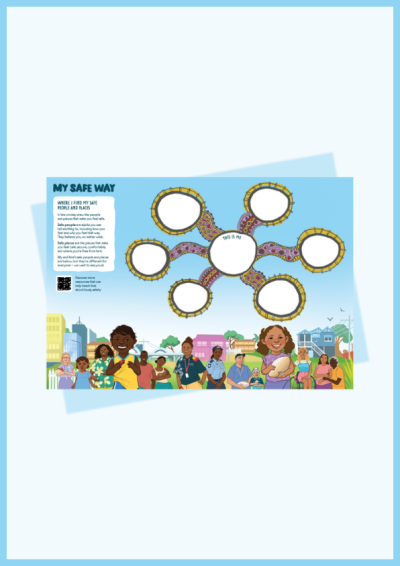
My Safe Way is a map that kids can fill in to identify safe people and safe places in their community. These are the people and places that children and young people can talk to or go to if they ever feel uncomfortable, worried or unsafe. You can download and print the coloured version or the black and white version for little ones that want to get creative and do their own colouring in.
My Safe Way – community map thumbnail

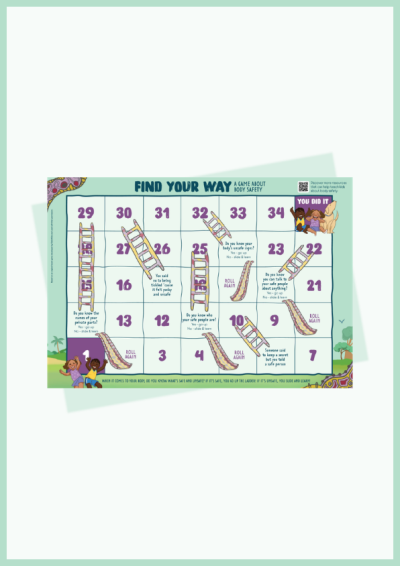
Find Your Way is a board game that can be played with kids to help teach them about body safety. It’s played in a similar way to snakes and ladders, but with the goal of helping adults to educate the children and young people in their life about what’s safe and unsafe. If you land at the bottom of a ladder, you can move up to the top of the ladder. If you land on a question, go up the ladder if you know the answer, or slide down and learn if you don’t. You can use a dice and counters you already have or print and make the ones we’ve created.
Find Your Way – educational game thumbnail

Resources to support conversations with organisations

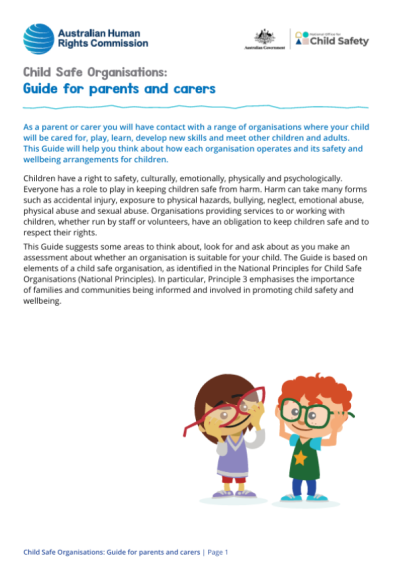
This guide helps parents and carers think about how the organisations the children and young people in their lives interact with operate and their safety and wellbeing arrangements for children.
Guide for parents and carers thumbnail

This toolkit includes questions about child safe practices you can ask staff or volunteers at organisations that work with children and young people, including guidance around child safety in sport.
Having conversations with organisations thumbnail

If you or a child are in immediate danger, call Triple Zero (000).

Information on reporting child safety concerns can be found on our Make a report page.

Get support

The information on this website may bring up strong feelings and questions for many people. There are many services available to assist you. A detailed list of support services is available on our Get support page.