
Tier 2 – Additional knowledge
Sections
Knowledge
In addition to Tier 1 knowledge, you need to know:
- there are different forms of disclosures – direct, indirect, behavioural and accidental
- disclosure is usually a process rather than a single event
- some victims and survivors may not have the language to disclose due to age, cognitive capacity, language literacy or developmental stage.
Skills
In addition to Tier 1 skills, you can:
- support and provide referrals to victims and survivors to assist them to identify the support they need to prioritise healing and wellbeing
- collaborate with services with skills to engage with people who do not have the language, vocabulary or communication to describe their experiences.
Tools to support you

Did you know?
Different ways to disclose
People make disclosures in a range of ways – directly, indirectly, behaviourally and inadvertently.
- Direct: A direct disclosure is usually purposeful and intentional.
‘I was sexually abused by a priest at my church when I was younger’
- Indirect or partial: When a person makes an indirect disclosure, they may be uncomfortable or unsure about sharing details or naming their experiences as child sexual abuse. They may tell you some of the story to see how you respond and determine whether they can trust you with more of their story.
‘Stuff happened between me and my brother when I was younger, and it still affects me’
(Note this recollection may or may not relate to child sexual abuse)
- Behavioural: A dramatic change in a person’s behaviour may be a behavioural disclosure. They may do this because they don’t have the words to describe their experience, are experiencing shame about what has happened, or are terrified to identify the perpetrator.
‘I just wanted someone to ask what was wrong and why I was suddenly failing at school and had stopped playing representative sport’
- Inadvertently: Inadvertent disclosures are more common among children and young people who may not realise that what has happened to them is child sexual abuse. They may ask questions about behaviour that confuses them.
'Why does Uncle Peter ask me to touch his willy?'
Barriers to disclosure
Aboriginal and Torres Strait Islander victims and survivors tell us that they experience additional barriers to disclosure and help-seeking, including fear of not being believed for the following reasons:
- if the person who perpetrates the sexual abuse is a non-Aboriginal/Torres Strait Islander person
- due to negative experiences of police intervention.
In addition, Aboriginal and Torres Strait Islander victims and survivors may fear:
- being ostracised by their community for raising issues perceived to bring shame on the community
- incarceration of perpetrators and young people who have displayed harmful sexual behaviours
- government child protection intervention.
Child sexual abuse material
If someone discloses to you that they have seen or sent child abuse material online, it is important not to minimise their concerns, as technology-facilitated abuse can have significant effects on people. Children and young people can experience additional barriers to reporting this, such as shame or blame for sending images or using the internet without permission.
The eSafety Commissioner reports that 1 in 8 children are coerced into producing child sexual abuse material remotely. There are many ways that technology can be used to sexually abuse children and young people. Technology may be used to anonymously establish contact with children and young people with a view to grooming them for an inappropriate or abusive relationship.
Children and young people may be sexually abused and exploited online or may be forced to send explicit pictures of themselves by people they know. Perpetrators can transfer their abuse from an online setting to offline face-to-face contact with the victim or survivor. Technology can also offer additional ways to manipulate and silence victims and survivors. For information about responding to technology-facilitated abuse, please visit the eSafety Commissioner website.
Knowledge
In addition to Tier 1 knowledge, you need to know:
- if your role does not relate to child protection or law enforcement, it is not appropriate for you to investigate. It is appropriate for you to provide support and advocate for the child or young person to be interviewed by an expert
- if your role relates to child protection or law enforcement, you may be required to participate in an investigation
- a disclosure from a victim or survivor of any age should prompt you to consider whether there is an ongoing risk to the safety of other children or young people
- victims and survivors may disclose through their behaviour and may want these signs to be noticed by someone they trust who will ask them about their safety and wellbeing.
Skills
In addition to Tier 1 skills, you can:
- offer to meet or speak with a victim or survivor in an environment where they feel safe, at a time suitable to them
- communicate your role and the limits of what you can do to support them
- check whether there are safety concerns prompting the disclosure at this time
- work out what you need to know to address safety concerns and provide an appropriate referral if needed
- respond empathetically to distress, fear and shame
- be aware of the messages a victim or survivor may be telling you through non-verbal communication, and what your body language may convey to them
- understand legislative requirements in your jurisdiction, including mandatory reporting and failure to report offences.
Tools to support you

Practice tip
Concerning or abusive adult behaviour
If you are concerned that an adult you are working with may be sexually abusing a child or young person or is engaging in technology-facilitated abuse, you can report this to police.
Work is progressing to launch a national offending prevention service in the first half of 2026. This Service will provide free, confidential and anonymous support in the form of a helpline and website and aims to protect children from sexual abuse by intervening before an individual offends or re-offends.
The service will provide advice and guidance to people to help them manage unwanted or inappropriate feelings towards children and young people, and prevent harmful or offending behaviour before it starts. Guidance for people concerned about another adult’s behaviour will also be available through this Service, including those who are not sure about making a report and would like to receive advice.
Asking about child sexual abuse
If a victim or survivor discloses to you, you need to ask what they would like to happen next. They may only want to tell you about what has happened to them and may not be seeking further support. You can ask if they would like to know about services and supports available and to identify these if appropriate.
Only specialist workers should ask probing questions, gather evidence or seek a ‘full story’ from the victim or survivor.
Be genuine and adjust your questions to suit the individual you are working with and your personal style. Open-ended questions are most useful and should be tailored to the age-group of the victim or survivor.
Children and young people
Rather than waiting for children and young people to come forth on their own, it is the responsibility of adults to ensure safety, recognise distress, and act in the child or young person’s best interests.
- An example question could be: ‘A lot of kids talk to me when something is making them feel sad, scared or upset. Is anything making you feel like that? It is part of my job to listen to you and I will do my best to work out how to help you.’
Young people can be asked direct questions in the absence of caregivers. Be genuine.
- An example question could be: ‘Is something or someone troubling you?’
For more information on asking children and young people questions, please see this practice paper, ‘Responding to suspected child sexual abuse’, from the NSW Health Education Centre Against Violence.
Adults
- Two example questions could be:
'A lot of people we see here have had difficult or traumatic experiences when they were growing up. Sometimes these experiences are still affecting them now. Is there anything you would like to tell me about?’ (this question may also be appropriate for some young people)
‘Can you tell me about anything sexual that happened to you as a child or young person that made you feel uncomfortable?’
Responding to disclosures of child sexual abuse from victims and survivors of all ages with disability
Sexual abuse of children, young people and adults with disability often goes undetected. Organisations must prioritise safety to minimise the risk of child sexual abuse. As a worker, you need to be aware that people living with disability are affected by the same perpetrator tactics as all victims and survivors. Perpetrators may also rely on aspects of the person’s disability to limit their ability to disclose. The perpetrator may:
- target a person with different ways of communicating due to lack of speech, literacy levels or development stage
- use the person’s reliance on them for daily needs, including treatment and therapies
- identify the person’s vulnerability and fear and use these as threats, for example, that the person will get into trouble, lose their accommodation, be blamed or disliked or lose their mobility aids
- use the person’s inability to assert personal boundaries or enact protective behaviours.
Detailed resources for Disability Support Workers about responding to disclosure from adults or children with disability can be found in the Disability Workforce Support Toolkit and Resources from Laurel House Sexual Assault Support Service.
You can build partnerships with specialist disability workers to improve responses to child sexual abuse disclosures. Adult victim and survivors with disability may be reluctant to disclose experiences of child sexual abuse because of fear of losing housing or financial support, and/or a lack of awareness of rights and access to reporting pathways. Children and young people with disability are at greater risk of child sexual abuse than those without disability because of their dependencies related to their disability and remain at greater risk of sexual violence across their lifespan.
Knowledge
In addition to Tier 1 knowledge, you need to know:
- family, kin and supporters may need assistance to manage their responses to the disclosure of child sexual abuse
- common reactions of family, kin and supporters include feeling ashamed that their child or loved one has been sexually abused and feeling guilty or judged by others for not preventing the abuse or realising it was happening/had happened
- a disclosure by a victim or survivor of child sexual abuse by a parent or other family member, including a sibling or other young person living in the same household, is likely to significantly impact the whole family system
- your response should involve and consider the needs of parents, carers, family, kin and people that matter most for the victim or survivor being supported.
Skills
In addition to Tier 1 skills, you can:
- provide referrals for family, kin and supporters to access their own help
- be aware of the limits of your role while providing a caring response to a family member, kin or supporter who discloses their own history of child sexual abuse when discussing the sexual abuse of their child or family member
- support family members, kin and supporters by maintaining clear communication pathways
- offer safety planning to mitigate and minimise future risk of concerning and harmful sexual behaviours displayed by children or young people in the family or close community – this should include not only physical safety but also emotional, cultural, situational, relational and psychological safety and wellbeing for all involved.
Tools to support you
Did you know?
Challenges for parents
It can be very challenging to parent a child or young person following a disclosure of child sexual abuse. This can be amplified when the child sexual abuse has been perpetrated by a family member. Parents may lack confidence in responding to the distress of the child or young person and may be less emotionally available to the child as they deal with the practical and emotional ramifications of the abuse. This can lead to a vicious cycle, as depicted in the child sexual abuse disclosure cycle graphic.
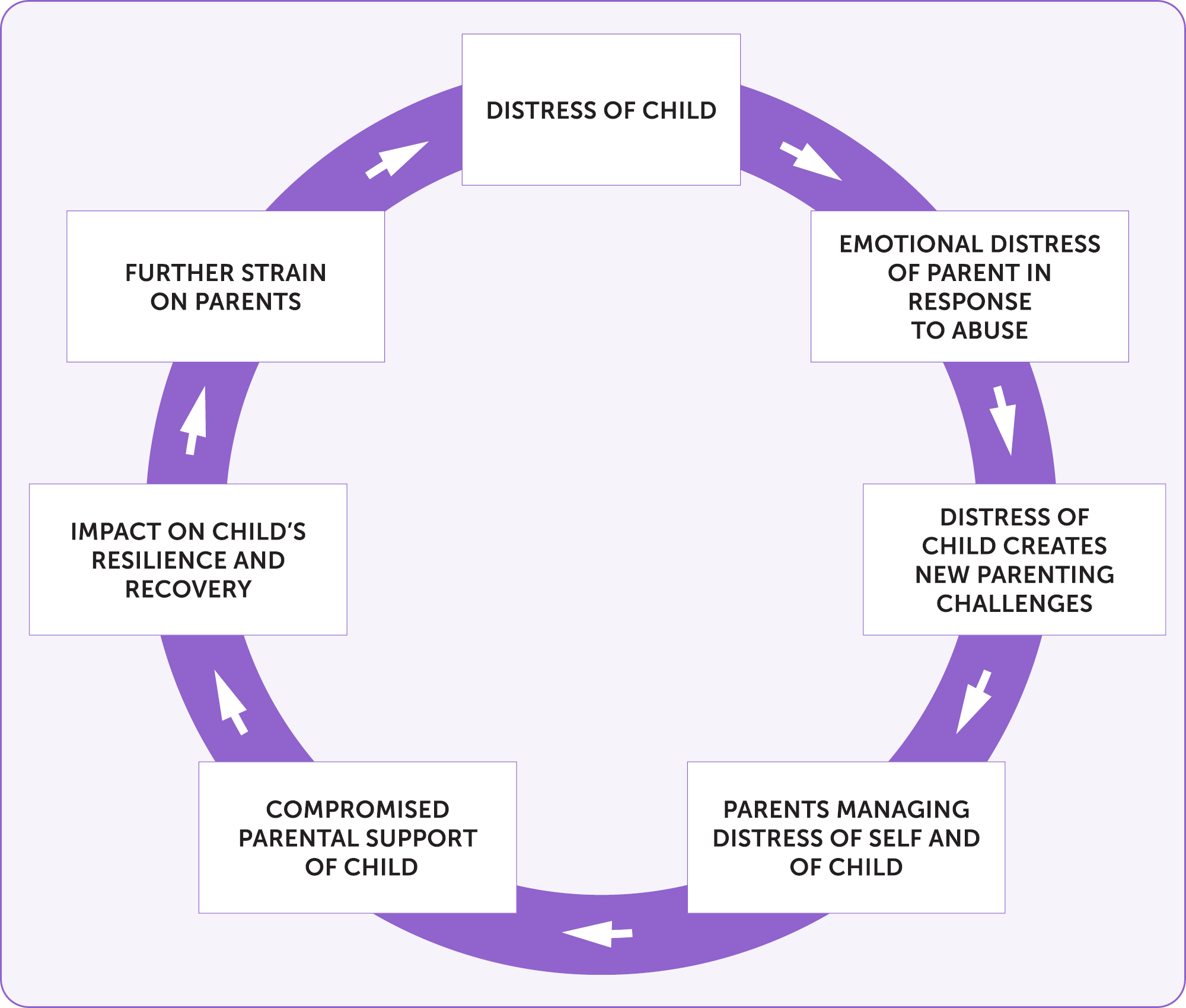
This graphic shows the following cycle of child sexual abuse disclosure;
- Distress of child
- Emotional distress of parent in response to abuse
- Distress of child created new parenting challenges
- Parents managing distress of self and of child
- Compromised parental support of child
- Impact on Child's resilience and recovery
- Further strain on parents (the cycle then restarts)
Practice tip
Engaging with family, kin, carers and supporters
Key elements of a supportive approach can be found in the UK Centre of Expertise on Child Sexual Abuse’s Supporting parents and carers: A guide for those working with families affected by child sexual abuse.
Knowledge
In addition to Tier 1 knowledge, you need to know:
- it is important to discuss confidentiality and its limitations with all victims and survivors at the point of engagement with your service and at other times if needed
- that non-offending parents, guardians, carers and kin have a right to be involved in any decision to report child sexual abuse
- there are some limits to confidentiality where a child, young person or adult is at immediate risk of harm or is unsafe
- how to record case notes accurately and comply with the expectations of your organisation and any legal requirements
- there are legal protections for the confidentiality of sexual assault victims’ (including victims of child sexual abuse) counselling records in all states and territories
- where to find information and get advice on what to do if you receive a subpoena for counselling or treatment records.
Skills
In addition to Tier 1 skills, you can:
- routinely discuss confidentiality and its limitations with children, young people and adults in a clear and accessible manner
- in situations where you are mandated or legislatively required to report, allow victims and survivors space and time to discuss their responses, feelings and concerns
- review your organisation’s policies for guidance on record keeping, confidentiality and consent requirements
- on receiving a subpoena, consider whether the information could be privileged and ask your manager to seek legal advice from within or outside your organisation
- ensure your file notes:
- are specific
- are factual
- are contemporaneous (recorded at the time or immediately after contact with the person)
- are accurate
- do not include your opinions.
- record the actual words used by the victim or survivor when they are disclosing, as well as any relevant context, with their consent and knowledge.
Tools to support you
Did you know?
Information management and record keeping
The Royal Commission made recommendations about information management, in order to address the impact of poor record keeping on children in out-of-home care and to assist those who were in care as children who are now seeking records.
The Commission recommended 5 high-level principles for records and record keeping that may be helpful for your practice:
- Creating and keeping full and accurate records relevant to child safety and wellbeing, including child sexual abuse, is in the best interests of children and should be an integral part of institutional leadership, governance and culture.
- Full and accurate records should be created about all incidents, responses and decisions affecting child safety and wellbeing, including child sexual abuse.
- Records relevant to child safety and wellbeing, including child sexual abuse, should be maintained appropriately.
- Records relevant to child safety and wellbeing, including child sexual abuse, should only be disposed of in accordance with law or policy.
- Individuals’ existing rights to access, amend or annotate records about themselves should be recognised to the fullest extent.
You can read the National Archives - Information Management Standards for further information.
Knowledge
In addition to Tier 1 knowledge, you need to know:
- about options for specialist child sexual abuse counselling in your area for adults, children and young people, the referral criteria and any associated costs
- networking with specialist services will ensure you know what services they provide, have a direct referral contact and are able to seek advice where needed
- not all victims and survivors will want a referral to a specialist service (even if you believe they would benefit from one)
- that your role is to provide referral to specialist services as needed or requested and not to attempt to provide these services.
Skills
In addition to Tier 1 skills, you can:
- discuss options for care, support and therapy collaboratively with a victim or survivor
- give accurate information about the referral process and the service and how it operates, including whether there is a wait list
- with the support of your organisation, network effectively with local services, including specialist child sexual abuse services
- in collaboration with the victim or survivor, make appropriate ‘warm’ referrals.
Tools to support you
Did you know?
Warm referrals
It is always helpful to have a list of possible referrals and ensure your network is current and aware of the work you do. This will ensure, with their consent, you can make a warm referral for a victim and survivor to ensure they don’t have to repeat their experience multiple times.
A warm referral involves contacting a service for or with the person, rather than just providing contact information for the service. For example, you and the victim or survivor or their family, carer, kin or supporter could make the phone call to the service together to make introductions and share information. Warm referrals can assist victims and survivors to avoid the ‘referral roundabout’, whereby someone gets passed from service to service until they end up back where they started.
In a report on pathways to support services produced for the Royal Commission by the Australian Institute for Family Studies, a specialist sexual assault service provider said:
‘I think the other thing is understanding that disclosing something like sexual abuse, especially if it’s happening to a young person, at that time it’s going to be upsetting. They’re going to be very distressed, so really supporting them to link in to the next service. So not just handing them a bit of paper but giving them a phone call, calling together, walking them to the thing.’
Practice tip
Medical and forensic examinations following child sexual abuse
An urgent sexual assault forensic medical examination may be required in circumstances, including:
- when the child or young person has been sexually assaulted within the previous 5 days
- where there are any symptoms or signs of acute injury as assessed by the medical practitioner.
You should consult a specialist sexual assault service to assist the victim and survivor and their family, kin or carer in the decision-making process about whether a medical or forensic examination is helpful or required.